
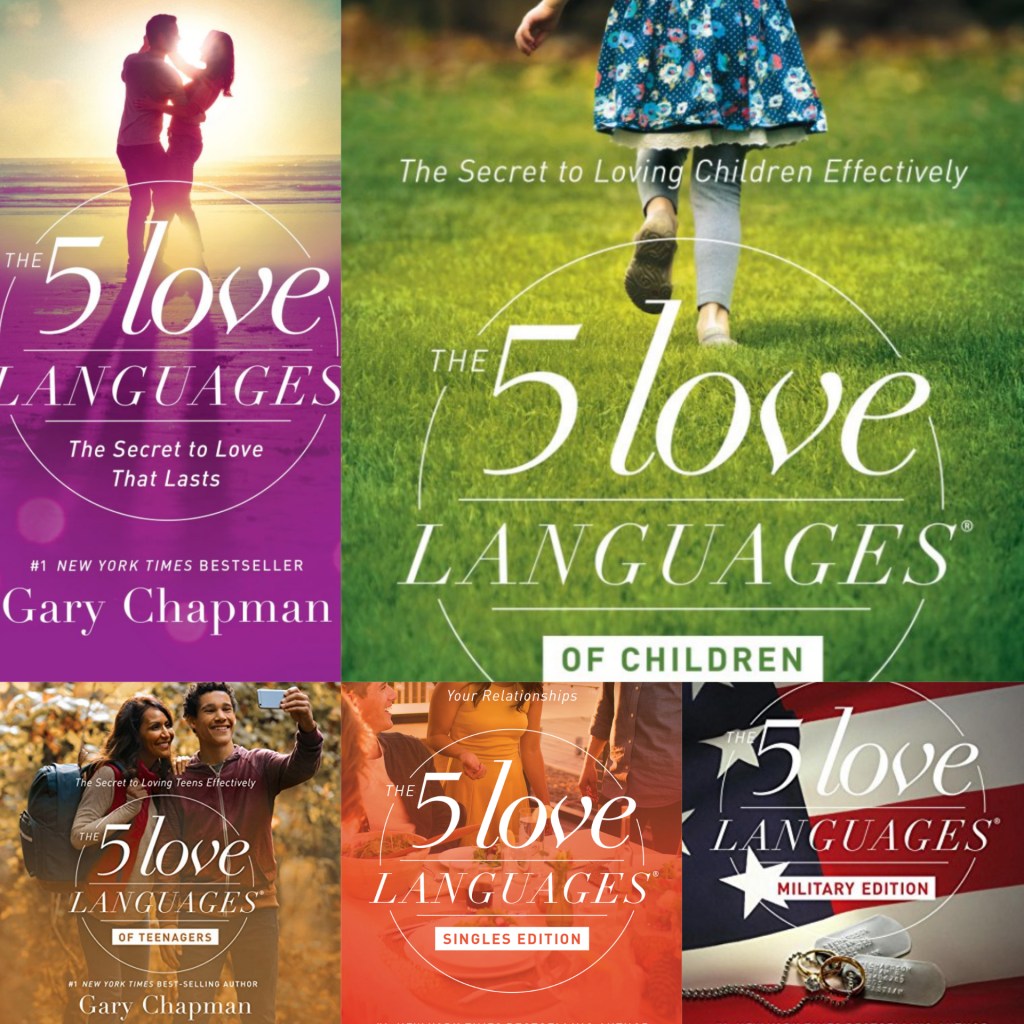
I was introduced to The 5 Love Languages by author Dr. Gary Chapman over a decade ago. His concept on love is used to guide us in better establishing relationships with others through understanding how we personally connect in the language of love. The 5 Love Languages can enhance our relationships with spouses/partners, children, and others by fostering overall growth through effort. By learning the 5 Love Languages, I have developed more meaningful connections with others, gaining a deeper understanding of how I receive love.
And over all these virtues put on love, which binds them all together in perfect unity.
Colossians 3:14

There are 5 Love Languages according to Dr. Gary Chapman in how we best interpret love.
- Quality Time
- Gift Giving
- Physical Touch
- Words of Affirmation
- Acts of Service
Knowing Your Love Language
Each person has a primary love language, although some individuals may strongly identify with two. Our love language profile is a unique blend of all five languages. If I had to choose one primary love language, quality time would be my preference, with acts of service being a close second in terms of sentimental value. My next three love languages, in order of importance, are words of affirmation, physical touch, and gift giving. Notably, I have noticed that our love language preferences often influence how we express love to others, often subconsciously. My expressions of love typically involve quality time, focusing on attentive one-on-one interactions, as well as acts of service. I place great value on quality time with loved ones, recognizing the irreversibility of time. I also appreciate the thought and effort behind acts of service. While my love languages are compatible with those who share similar preferences, there may be instances where my expressions of love are not aligned with someone whose love language differs.

Create A Healthy Balance In Love Languages
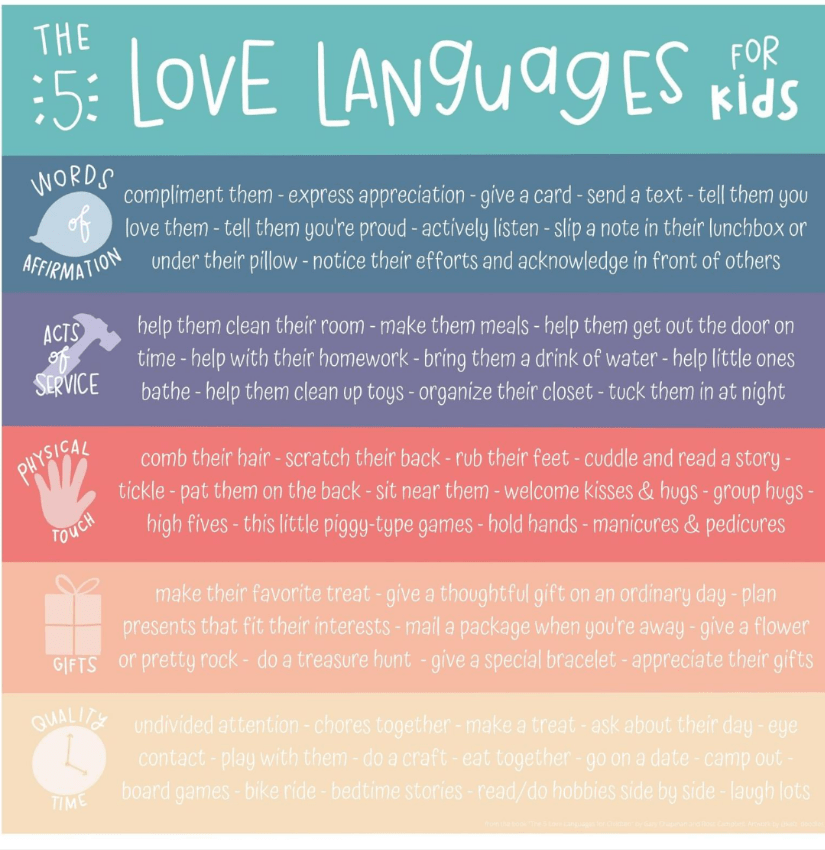
I have read The 5 Love Languages, which addresses the needs of couples, children, and singles. Each of my children has their own unique love language. Two of my children prioritize quality time, valuing one-on-one interactions, family activities, and shared experiences without the presence of their siblings. Another daughter’s love language is gift giving; she appreciates thoughtful presents tailored to her interests, rather than extravagant gifts. One daughter’s primary love language is physical touch, as she enjoys hugs, holding hands, and cuddling. I also make a conscious effort to connect with my close friends through quality time, ensuring that we regularly catch up, meet up, and support each other during special occasions, despite our busy schedules. Through trial and error, I have discovered how beneficial it is to cultivate meaningful long lasting relationships by becoming intentional with acknowledgement of how each loved one best receives love.
All Love
I’ve read the 5 Languages for couples, children, and now for singles. My children each have their own love language. I have two children whose love language is quality time. Those are my children who cherish one on one time in outings, heartfelt conversations, family activities, and doing activities together with me without a tag along sibling. I have one daughter whose love language is gift giving. She doesn’t ask for fancy gifts, but she holds dear thoughtful gifts that are catered to her interests. I have a daughter who loves hugs, holding hands, and sitting as close as she can to cuddle whose love language is physical touch. My closest friends and I share quality time in making sure that although we have busy schedules we connect with each other to catch up, we make time to meet up, and we show up for each other’s special occasions when we can. I found that romantically through trial and error it was crucial for a spouse or partner to diligently understand how to apply some form of the 5 Love Languages in having happiness in successful couple goals, or the onset of the relationship going into danger zone emerged. I tap into my own love language by making sure I provide myself with quality alone time to do the things I enjoy peacefully.
Don’t Make It Complicated
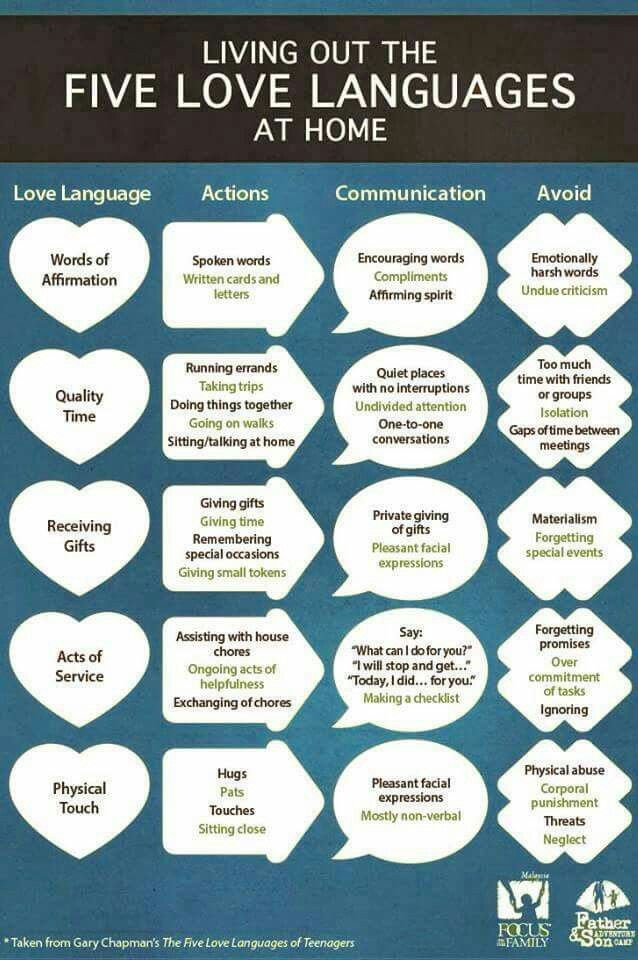
The 5 Love Languages have actually simplified my perspective on love, making it more accessible rather than convoluted. I don’t conduct self-assessments on everyone I meet to gauge their feelings about love. Instead, I apply my knowledge of the 5 Love Languages primarily to my relationships with family, close friends, and those in my immediate proximity, with whom I have a personal connection. I have a coworker with whom I am in sync, and I am aware that she responds positively to words of affirmation. I also have a close neighbor who appreciates thoughtful gifts, so I crafted a wreath for her during the holiday season. It’s truly the small gestures that make a significant impact when applying the 5 Love Languages to understand love.
What’s your Love Language? Share in the comments. Join me this week for my latest podcast on the topic. ❤️

 Purpose Filled Mommy with Minimarie
I guess as far as self-love, I would say receiving gifts is my love language. I don’t spend much on myself, so it is a rare treat.
In an intimate relationship, it would be physical touch. It is something I didn’t have growing up.
LikeLiked by 2 people
Thanks so much for sharing! It’s different for me to spend on myself as well, but l doing little things now. I didn’t have it growing up as well.
LikeLiked by 1 person